Niagara Peninsula
The Niagara Peninsula is Ontario's largest winegrowing appellation, on the Canadian side of the Niagara River and along Lake Ontario. Its vineyards support dry still wines, sparkling wine, and sweet styles. The region's importance extends well beyond a single grape or production method.
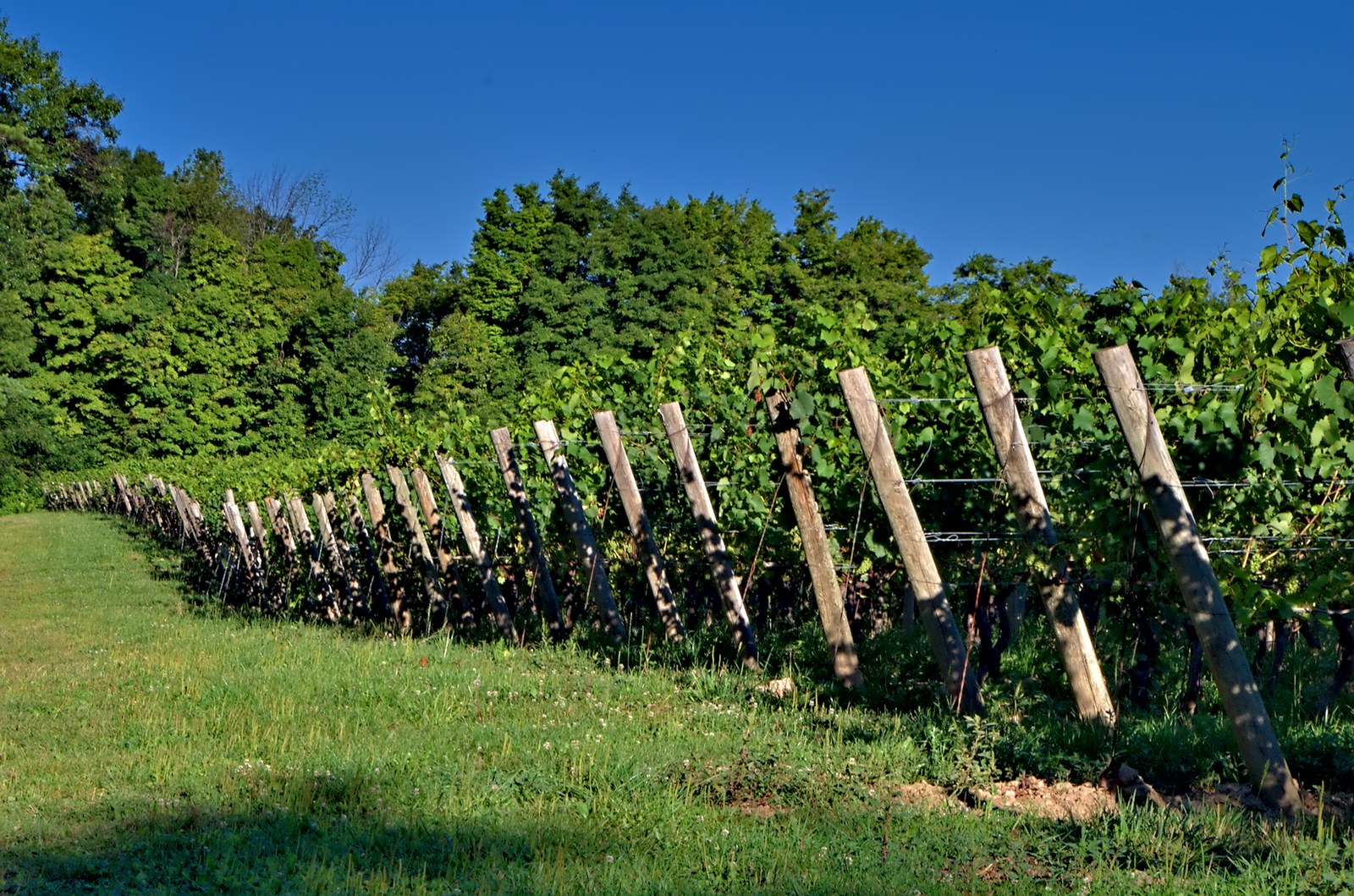
The lake and the escarpment
Lake Ontario moderates nearby temperatures. Its water warms and cools more slowly than the land, helping delay spring development and prolong autumn ripening. The Niagara Escarpment influences how that air moves through the vineyards. Distance from the lake, slope, and elevation therefore matter alongside the regional climate.
The benchlands below the escarpment have varied slopes and soils containing clay, silt, and other glacially deposited material. Streams cutting through the slopes contribute further differences in drainage. The Ontario Wine Appellation Authority groups Beamsville Bench, Twenty Mile Bench, and Short Hills Bench within its Niagara Escarpment regional appellation.
Grapes and wine styles
Riesling, Chardonnay, Pinot Noir, Cabernet Franc, and Gamay are useful routes into Niagara's dry wines. The contrast between grapes and sites is important: the peninsula contains many growing environments, with warmer and cooler locations suited to different harvest goals.
Niagara also provides a useful comparison with New York's Finger Lakes. Both demonstrate the value of large bodies of water in a continental setting, though their vineyard landscapes differ. In either region, lake moderation reduces some climatic extremes while leaving vintage weather and individual vineyard conditions consequential.
For readers, a more specific origin on the label can add useful context. The broad Niagara Peninsula name encompasses a larger range of sites than a named bench or other sub-appellation.
Sources
- Ontario Wine Appellation Authority, “Niagara Peninsula.”
- Ontario Wine Appellation Authority, “Niagara Escarpment.”