Anderson Valley
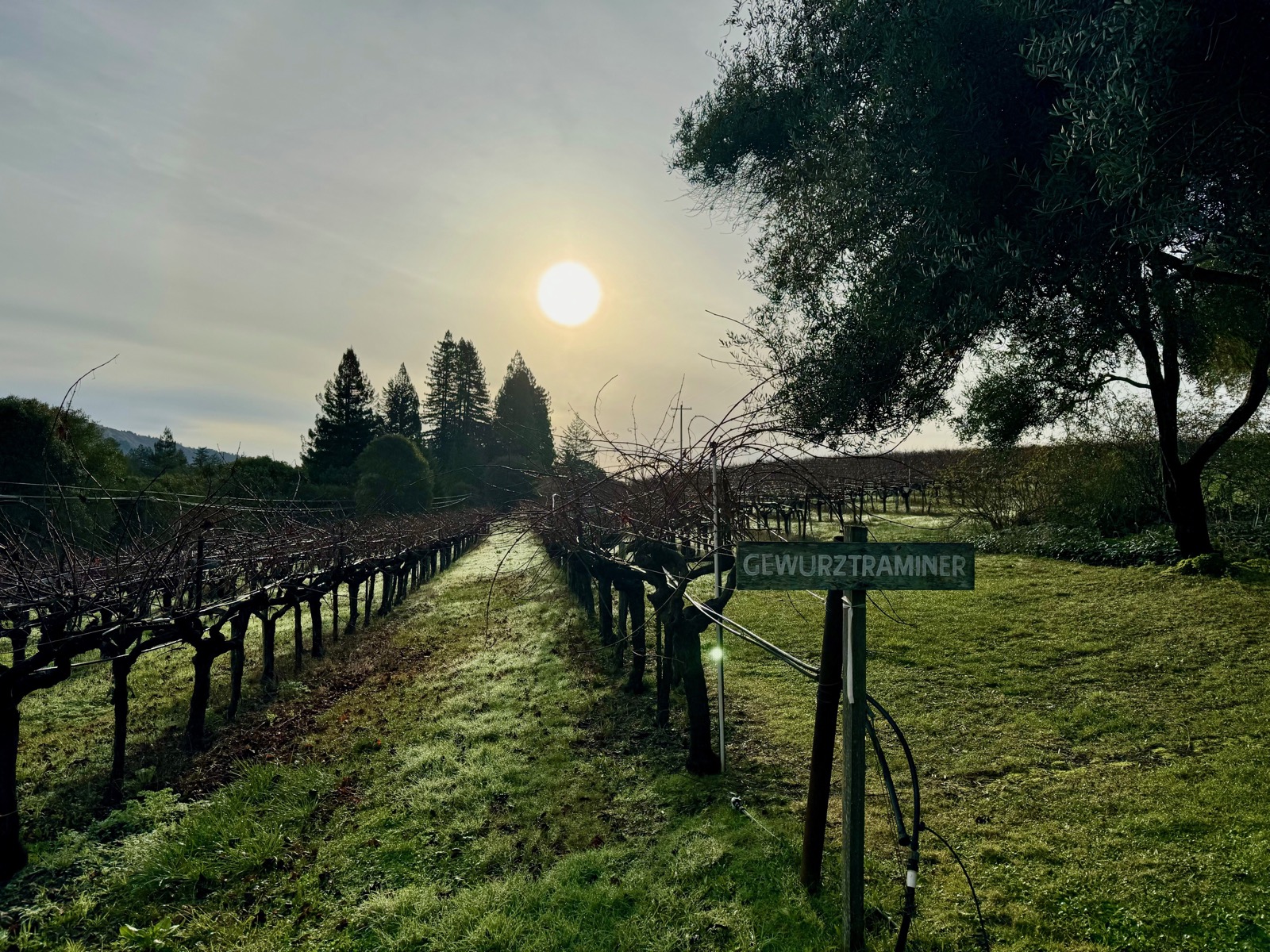
Anderson Valley is a wine-growing valley in Mendocino County, northern California, running inland from the Pacific through the Navarro River watershed. Pinot Noir, Chardonnay, and traditional-method sparkling wine are central to its modern identity. Aromatic whites, particularly Gewürztraminer and Riesling, give the region a longer and more varied story than Pinot alone.
The valley became an American Viticultural Area in 1983. Its development combined local growers and small wineries with investment in sparkling wine, creating several different uses for fruit from this relatively cool California setting.
The Deep End and the hills
Ocean air and fog travel inland along the valley. The northwestern part, known locally as the Deep End, is especially exposed to that influence. Farther inland, conditions can be warmer. A vineyard's position on a slope also changes its exposure to fog, sunshine, and cold air.
Elevated sites may emerge above the fog earlier in the morning. Some also avoid the coldest air that collects lower down during clear nights. The result can be a smaller daily temperature swing than on the valley floor, despite the greater elevation. This is why a description such as “cool climate” needs a site and season attached to it.
The contrast matters particularly for early-ripening grapes. A gradual season can give growers time to choose their balance of sugar, aroma, and acidity; heat during the final stages can compress that window. In its 2024 newsletter, Navarro described adjusting shade and using cooling water during hot conditions for Gewürztraminer, while reporting that the cooler 2023 season had delayed ripening favourably. This is a producer's account of particular seasons and adaptations, not evidence that all valley sites respond alike.
Still wines and aromatic whites
Still Pinot Noir involves decisions about skin extraction and harvest ripeness quite different from those used for a pale sparkling base wine. Single-vineyard bottlings also let producers distinguish the valley's warmer, cooler, higher, and more sheltered sites. Colour and body vary with those conditions as well as the handling of skins and stems.
Navarro gives a concrete example of aromatic white winemaking. Its 2023 Deep End Gewürztraminer was picked at night, given a cold soak, fermented cool in large oak ovals, and held on its lees for seven months. Large wooden vessels and lees ageing can provide a route to texture without making new-barrel aroma the principal feature of the wine.
The producer's range includes dry aromatic whites, an off-dry Edelzwicker blend, and sweet late-harvest wines. The floral scent of Gewürztraminer or Riesling therefore does not tell the drinker how much residual sugar remains. Sweetness is a separate stylistic decision.
Sparkling wine as a distinct harvest goal
Fruit for sparkling wine is generally picked with less sugar and more retained acidity than fruit destined for many still wines. The traditional method then adds a second fermentation in bottle and maturation on the resulting yeast sediment. Growing conditions support the base wine; blending and time shape the finished sparkling wine.
Roederer Estate documents this distinction through estate-grown fruit and a reserve-wine programme. It holds selected still wines in large oak casks before including them in later blends, then uses bottle fermentation and lees maturation. Older reserve wine supplies another component alongside the current harvest. Its first sparkling release in 1988 followed earlier regional activity by Scharffenberger and Handley, showing how sparkling production became an enduring part of the valley's wine culture.
Sources
- Anderson Valley Winegrowers Association, “Why Is Anderson Valley So Good for Growing Pinot Noir?”, geographical and climatic overview, accessed 6 October 2026.
- Anderson Valley Winegrowers Association, “Cheers to Anderson Valley for Forty Years as an AVA”, 2023.
- Navarro Vineyards, Summer 2024, vineyard and winemaking notes for the 2023 releases.
- Roederer Estate, “Winemaking”, reserve wines and sparkling production, accessed 6 October 2026.