Glera
Also known as Prosecco Tondo
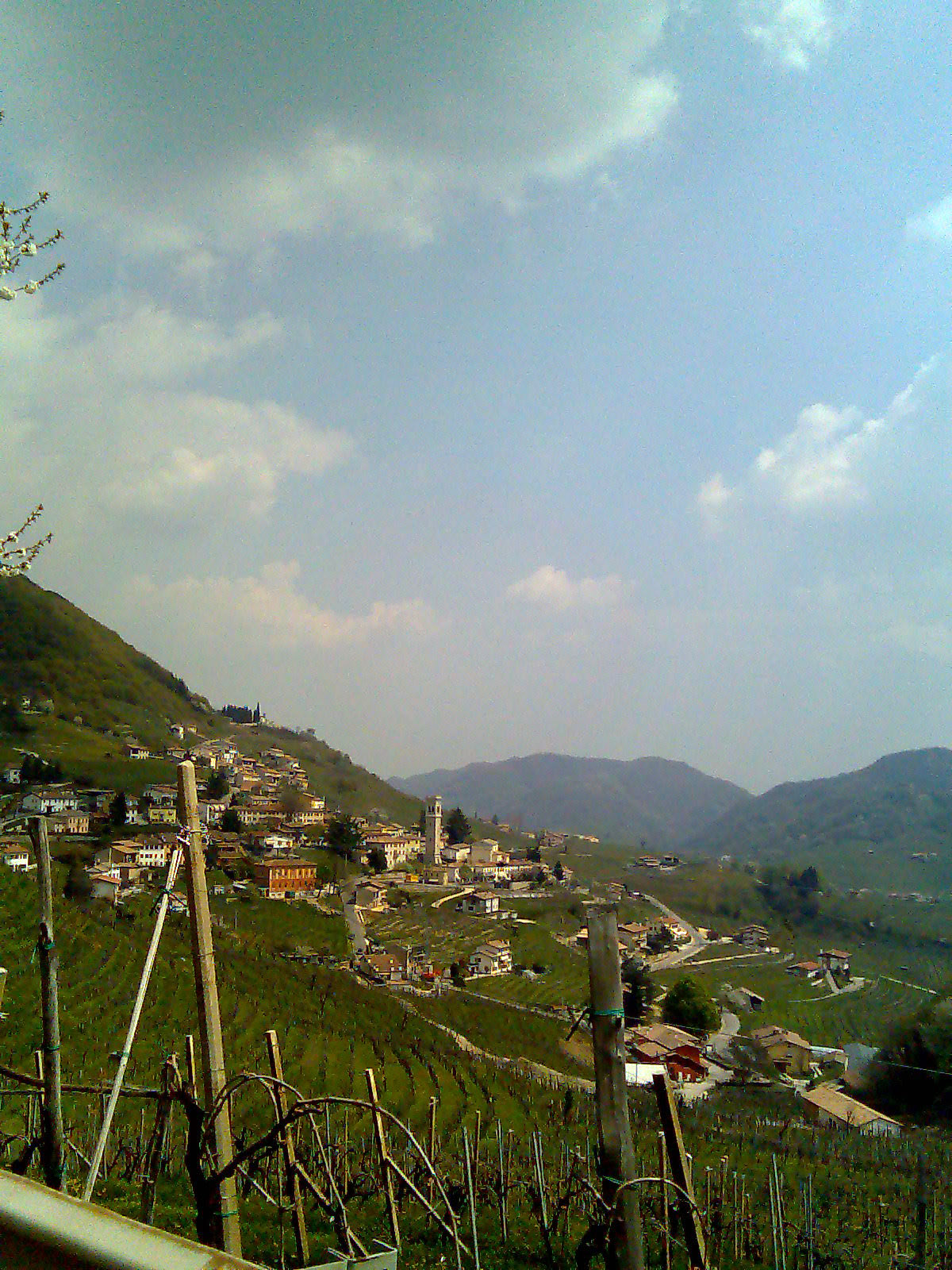
Glera is the white grape at the centre of Prosecco, associated especially with the hills of Conegliano and Valdobbiadene and the wider northeastern Italian production area. Its relatively delicate fruit and floral aromas, moderate body, and suitability for sparkling wine help explain its success. The grape and the geographical wine designation are nevertheless different things: growing Glera alone does not establish a wine's appellation.
Names and places
Prosecco was historically used as a grape name; Prosecco Tondo distinguishes the round-berried variety now called Glera from Glera Lunga, a separate cultivar. Older use of Glera itself could encompass more than one local variety. A 2009 genetic study documented that complexity in northeastern Italy, so historical names should be interpreted in context.1. M. Crespan et al., “Molecular contribution to the knowledge of two ancient varietal populations: 'rabosi' and 'glere',” Acta Horticulturae 827 (2009), abstract.
Today, the broad Prosecco DOC production area spans specified provinces of Veneto and Friuli Venezia Giulia. The Conegliano Valdobbiadene hills provide a more geographically focused context, with the Rive and Cartizze names directing attention to particular places. Scale and site both matter: there is no single vineyard landscape behind every bottle called Prosecco.
Under the DOC specification consulted in September 2026, Glera supplies at least 85% of white Prosecco; other listed varieties may contribute the balance. Prosecco Rosé combines Glera with red-vinified Pinot Noir, rather than requiring a pink form of Glera.2. Consorzio Tutela Prosecco DOC, production specification, article 2, accessed September 2026.
Vineyard behaviour
Vivai Cooperativi Rauscedo describes early budbreak, vigorous growth, and late ripening. Long shoots and substantial production make canopy management and crop balance important. Its recommendations favour long pruning and careful summer work, rather than assuming that a productive vine needs little attention.
The same profile notes vulnerability to prolonged drought and winter cold. These limits qualify any simple expectation that warming automatically improves growing conditions. Managing a long season involves water and vine health as well as reaching harvest sugar levels.
How the bubbles change the wine
In the widely used Martinotti or Charmat method, a still base wine undergoes a second alcoholic fermentation in a closed pressure tank. Retained carbon dioxide supplies the bubbles. The Conegliano Valdobbiadene consortium explains this method as a way to preserve the grape's fruit and floral expression. Sweetness remains a separate choice: residual sugar, acidity, and pressure jointly shape the impression in the glass.
Bottle refermentation supplies another, still-active tradition. The consortium's 2026 wine list includes Sui Lieviti wines, in which yeast sediment remains in the bottle, alongside other sparkling styles. Bival's Costante 08 and Le Manzane's Springo Green appear as examples. This lees presence gives readers a reason to distinguish the style from a clear, filtered tank-method wine. It is also different from automatically assuming the full traditional-method sequence of riddling and disgorgement.
Sources
- M. Crespan et al., “Molecular contribution to the knowledge of two ancient varietal populations: 'rabosi' and 'glere'”, Acta Horticulturae 827 (2009), pp. 217–220; abstract consulted.
- Vivai Cooperativi Rauscedo, “Glera”, varietal profile, accessed September 2026.
- Consorzio Tutela Prosecco DOC, production specification, accessed September 2026.
- Consorzio Conegliano Valdobbiadene Prosecco Superiore, “Academy”, grape and production accounts; Vinitaly 2026 Wine List, regional categories and Sui Lieviti examples.