Sonoma County
Sonoma County is a broad wine-growing area in northern California, extending from the Pacific coast to inland valleys and the mountains beside Napa Valley. It encompasses cool Pinot Noir and Chardonnay districts, warmer Cabernet country, and a substantial tradition of Zinfandel-based wines. The county's breadth makes its smaller regions useful guides to growing conditions.
Sonoma County is a county appellation, distinct from the Sonoma Valley and Sonoma Coast American Viticultural Areas, or AVAs. A Sonoma County label can encompass fruit from several different districts; it should not be read as a synonym for the town of Sonoma or the valley around it.
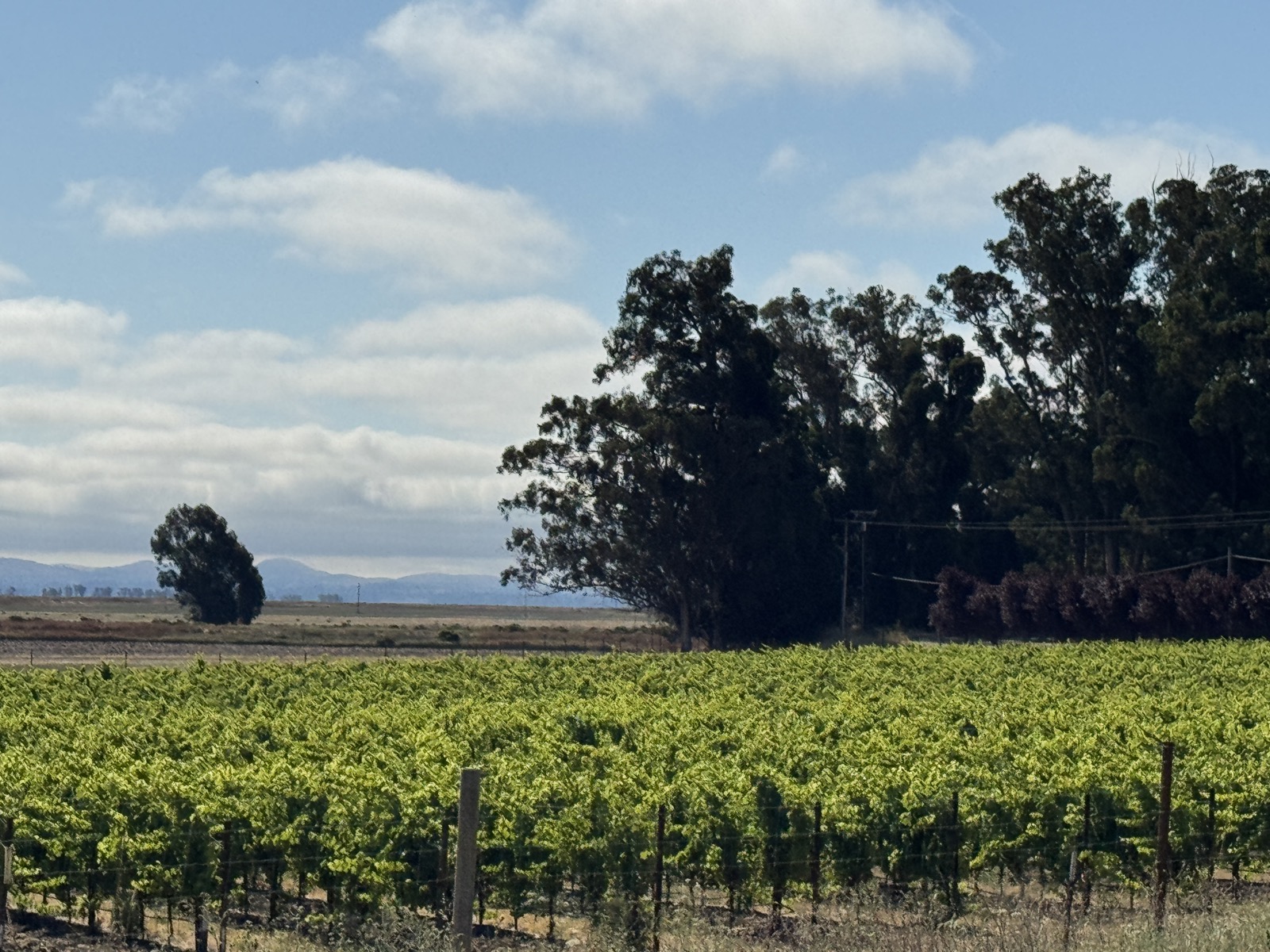
A county of contrasting growing places
The Pacific influences western vineyards directly and reaches inland through gaps in the coastal hills. The Russian River corridor, Petaluma Gap, and San Pablo Bay bring cool air into different parts of the county. Exposure to those routes helps determine how long a vineyard remains foggy and how quickly it warms during the day.
The Russian River Valley and Sonoma Coast are important settings for Pinot Noir and Chardonnay. Warmer inland districts such as Alexander Valley and Knights Valley offer a longer accumulation of heat for Cabernet Sauvignon. Hillsides add changes in exposure, soil depth, and water availability within each district.
Dry Creek Valley gives another point of orientation. Its Zinfandel and Sauvignon Blanc connect the county to both older mixed vineyards and contemporary varietal wines. Farther south, Carneros crosses the Sonoma–Napa county boundary, illustrating how a growing area can follow climate and terrain across an administrative line.
Old vineyards and contemporary wines
Ridge's Lytton Springs estate in Dry Creek Valley documents the mixed-variety tradition particularly clearly. Old Zinfandel vines grow alongside Petite Sirah, Carignan, and smaller amounts of other grapes. Ridge describes fermenting varieties and lots separately before assembling the wine. A mixed planting therefore need not imply that all its fruit is harvested and fermented together.
This approach preserves more than old trunks. Companion varieties can change the blend's acidity, colour, and tannin, while separate lots allow the winemaker to respond to differences in ripening. Ridge began making Lytton Springs in 1972 and later purchased the estate, giving the example a sustained history as well as a current farming context.
Alexander Valley illustrates another strand of Sonoma wine. Its modern Cabernet development includes Robert Young's planting in the 1960s and Rodney Strong's early vineyard-designated Cabernet. The county's Cabernet growers work across valley floor, benchland, and hillside positions, with different exposure and root-zone conditions even within one appellation.
Reading a Sonoma label
A smaller place name gives more geographical information, but it does not establish a hierarchy of quality. A producer may deliberately blend fruit across districts, or use a broader appellation for a wine from one site.
Federal origin rules distinguish the categories: a county appellation requires at least 75% of the wine to derive from fruit grown in that county, while an AVA requires at least 85% from grapes grown within its boundary. Other production and applicable state requirements also apply.1. Alcohol and Tobacco Tax and Trade Bureau, “Wine Labeling: Appellation of Origin,” domestic appellation requirements, accessed 6 October 2026. The winery's street address alone does not establish where its grapes were grown.
Related topics
Sources
- Sonoma County Winegrowers, “Sonoma County Terroir”, regional overview, accessed 6 October 2026.
- Sonoma County Tourism, “Sonoma Wine Facts”, geography and regional overview, accessed 6 October 2026.
- Ridge Vineyards, “Lytton Springs”, vineyard history and winemaking, accessed 6 October 2026.
- Sonoma County Winegrowers, “The Beauty and History of Alexander Valley Cabernet Sauvignon”, 2023.
- Alcohol and Tobacco Tax and Trade Bureau, “Wine Labeling: Appellation of Origin”, accessed 6 October 2026.