England
England is an established contemporary winegrowing country whose production includes traditional-method sparkling wine and an increasingly varied range of still wines. Chardonnay, Pinot Noir, and Meunier are central to the sparkling tradition; Bacchus provides another distinctive route into its white wines.
Regional differences
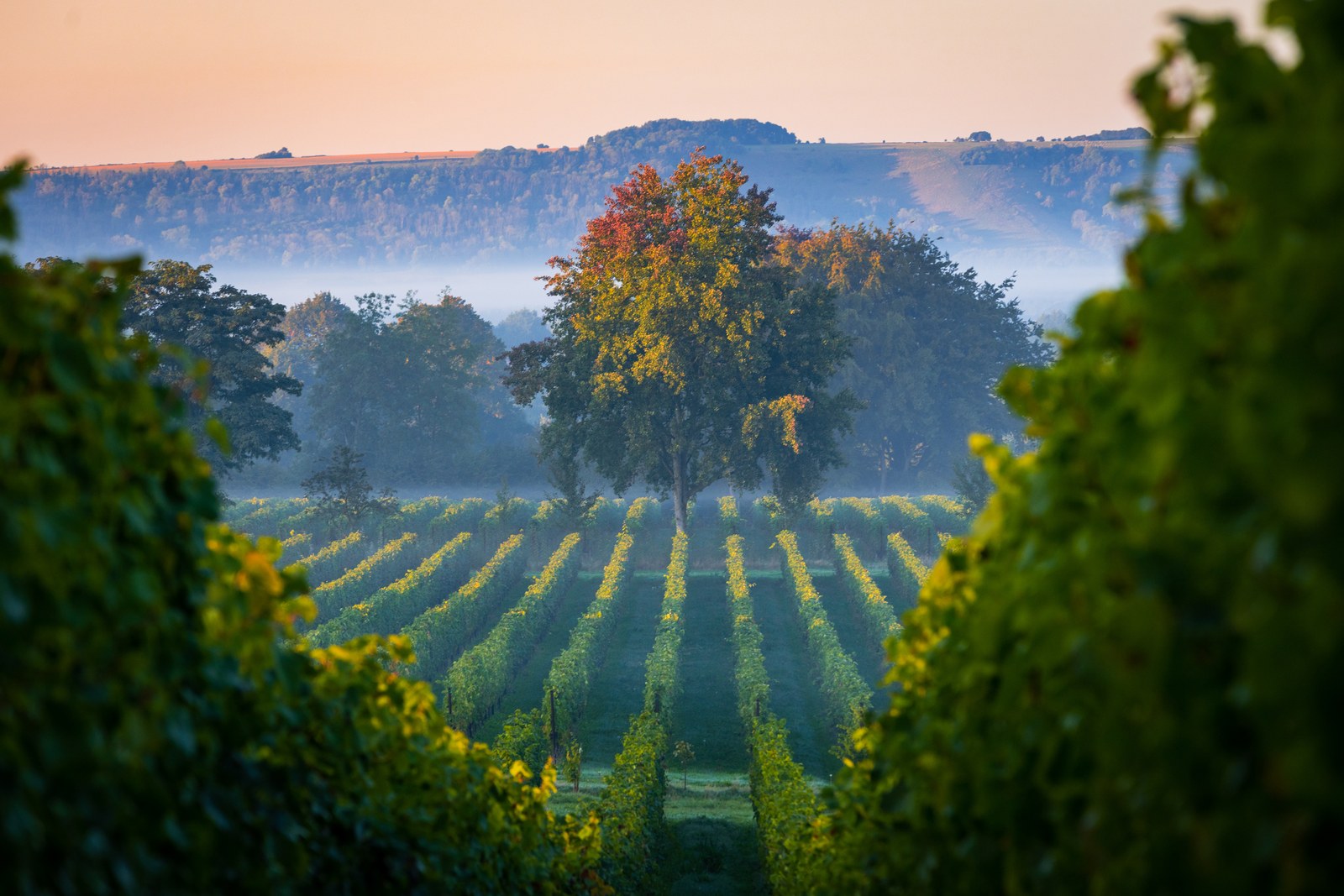
Southern and southeastern England contain much of the industry's vineyard base. Sussex and Hampshire are important sparkling-wine reference points, while Kent supports both sparkling and still production. Essex, especially the Crouch Valley, has become important for still Chardonnay and Pinot Noir. These county names provide orientation, though soils and growing conditions also vary within their boundaries.
Chalk is part of the landscape, alongside greensand, clay, and other soils. A shared rock type with Champagne can help frame a geological comparison, but English vineyards have their own exposures, weather, and production histories.
Warming and continuing risk
Warmer growing seasons have expanded opportunities for commercially important grapes. A 2023 study by Kate Elizabeth Gannon and colleagues nevertheless emphasizes continuing exposure to spring frost, growing-season rainfall, and large variation between vintages.1. Kate Elizabeth Gannon et al., “Adaptation to climate change in the UK wine sector,” Climate Risk Management 42 (2023), 100572. The industry has grown through both changing conditions and active adaptation by growers and businesses.
The distinction between sparkling and still wine matters here. Grapes chosen for a sparkling base need a different balance from fruit intended for a concentrated still wine. Producers can respond through vineyard selection, harvest timing, grape choice, and the styles they make, while retaining the need for sound fruit and reliable ripening.
England's enduring relevance is therefore broader than a warming-climate prediction. It already supports several wine styles, and its regional identities continue to develop through sustained production.
Sources
- WineGB, “Wine regions,” regional production and grape overview.
- Kate Elizabeth Gannon et al., “Adaptation to climate change in the UK wine sector,” Climate Risk Management 42 (2023), 100572.