Mendoza
Mendoza is Argentina's principal wine province, at the eastern foot of the Andes. Malbec is its most internationally recognizable grape, but the province also supports substantial production from other varieties and several distinct growing areas. A Mendoza label identifies a broad origin, not one uniform climate or wine style.
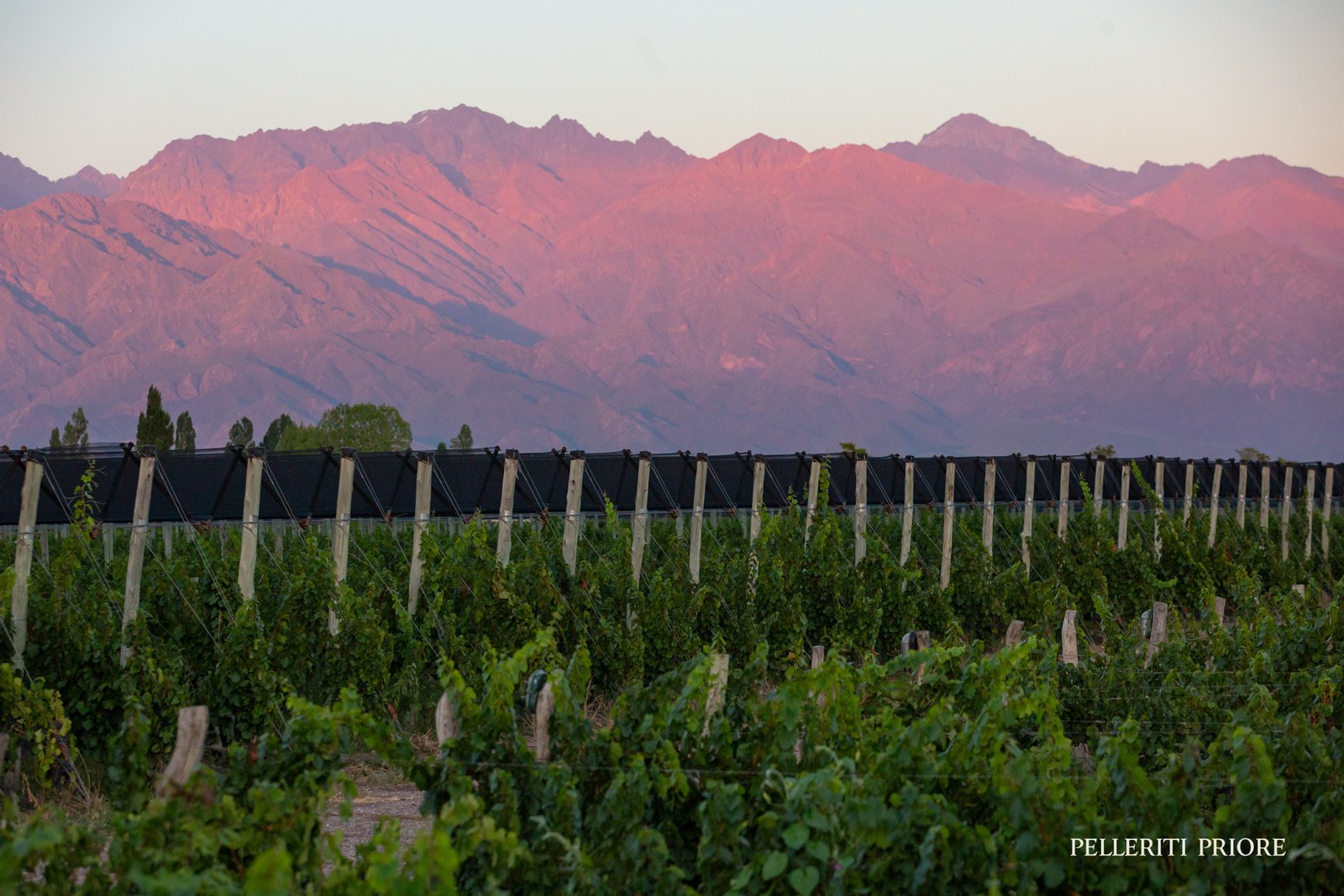
A province of different growing areas
Wines of Argentina distinguishes the Uco Valley, the traditional Luján de Cuyo and Maipú area, and northern, eastern, and southern oases. Vineyard height and proximity to the Andes vary considerably. Luján de Cuyo, Maipú, Tupungato, Tunuyán, and San Rafael therefore supply useful geographical context beyond the province name.
Altitude affects temperature and radiation, while local soils and exposure influence water supply and the conditions around fruit. Higher ground can provide cooler conditions, but elevation alone cannot predict the character or quality of the finished wine.
Water and grape diversity
Water management is fundamental to the province's vineyard economy. The Mendoza government identifies the wine sector as a major water user and documents work between the Mendoza River Water Fund and Wines of Argentina on water efficiency and watershed conservation. This places resource management alongside grape and site selection in understanding the region's future.
Malbec remains a central reference point, with Cabernet Sauvignon, Cabernet Franc, Chardonnay, and Sémillon among the other grapes grown. Bonarda and pink-skinned varieties such as Cereza and Criolla Grande also form part of the province's vineyard base.
Comparing wines from named districts and vineyards gives a clearer view of Mendoza than treating every bottle as a rich, heavily oaked Malbec. Grape, site, harvest decisions, and maturation all contribute to the range.