Véraison
Véraison marks the onset of grape ripening. Berries soften, sugar accumulation accelerates, and their appearance changes. Dark-skinned varieties begin to colour as anthocyanin pigments accumulate; white varieties become more translucent. This is a transition in the berry's development, preceding the further changes that lead to harvest.
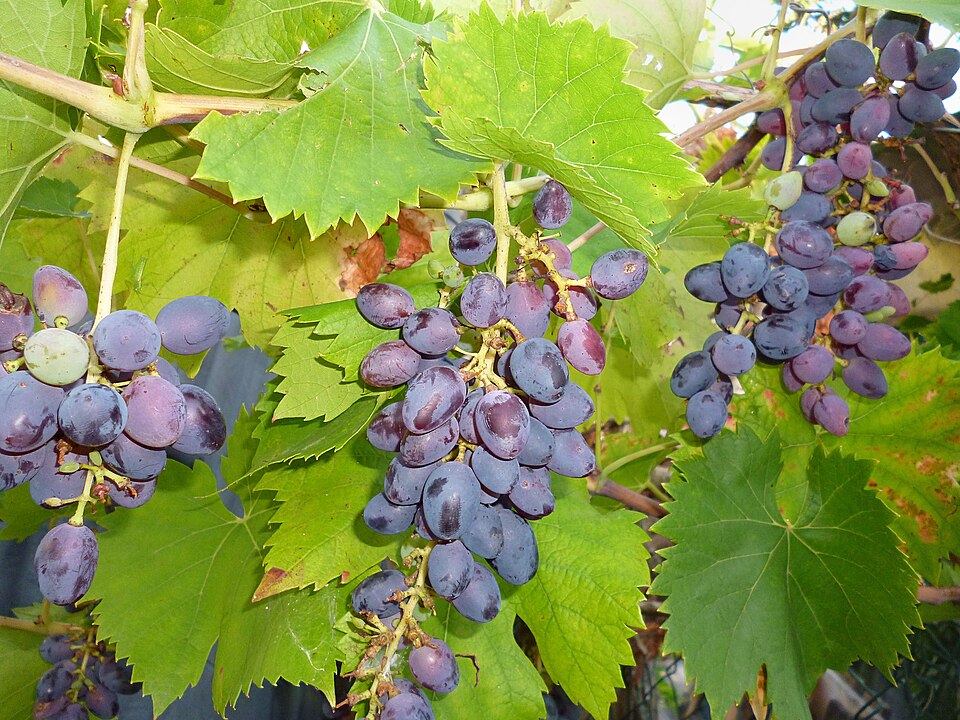
Several changes happen together
Young berries accumulate organic acids during their earlier growth. As ripening proceeds, the balance shifts towards increasing sugar concentration and declining acidity. Malic acid generally declines more rapidly than tartaric acid. The skin, pulp, and seeds also change in different ways, affecting the materials later extracted during maceration.
Colour is the most conspicuous sign in a dark-skinned grape, but it is only one part of the process. Aroma compounds and their precursors also develop, and the composition most suitable for harvest depends on the intended wine. The onset of colour therefore does not establish that the fruit is ready to pick.
Following ripening towards harvest
Healthy leaves and adequate water remain important after véraison. Severe water stress can reduce photosynthesis and slow the vine's ability to ripen its crop. A small berry is consequently not, by itself, evidence of a favourable balance between growth and fruit production.
Sugar measurements also require interpretation. Water loss can raise the concentration of soluble solids, commonly measured in degrees Brix, without a corresponding increase in the amount of sugar within each berry. Joseph Fiola's Maryland extension account highlights this problem under drought stress. Following berry condition, acid balance, and flavour alongside sugar helps distinguish ongoing ripening from concentration caused by dehydration.
Véraison supplies a useful seasonal reference for these observations. The interval that follows is shaped by variety, weather, vine condition, and the winemaker's harvest objective.
Sources
- Anita Oberholster, Assessments of Ripeness, University of California, 27 February 2015.
- Joseph Fiola, “Drought Stress, Vine Performance, and Grape Quality”, University of Maryland Extension, updated 2021.