Muscadelle
Muscadelle is a white grape associated with the floral component of Bordeaux blends and the concentrated fortified wines of Rutherglen in Australia. Those uses draw on different qualities: perfume in a supporting role in Bordeaux, and the capacity to develop sweetness and mature in wood in Rutherglen.
Despite the similar name, it is a distinct variety from Muscat Blanc à Petits Grains. The distinction matters particularly in Rutherglen, where Muscat and Muscadelle make separate families of fortified wine.
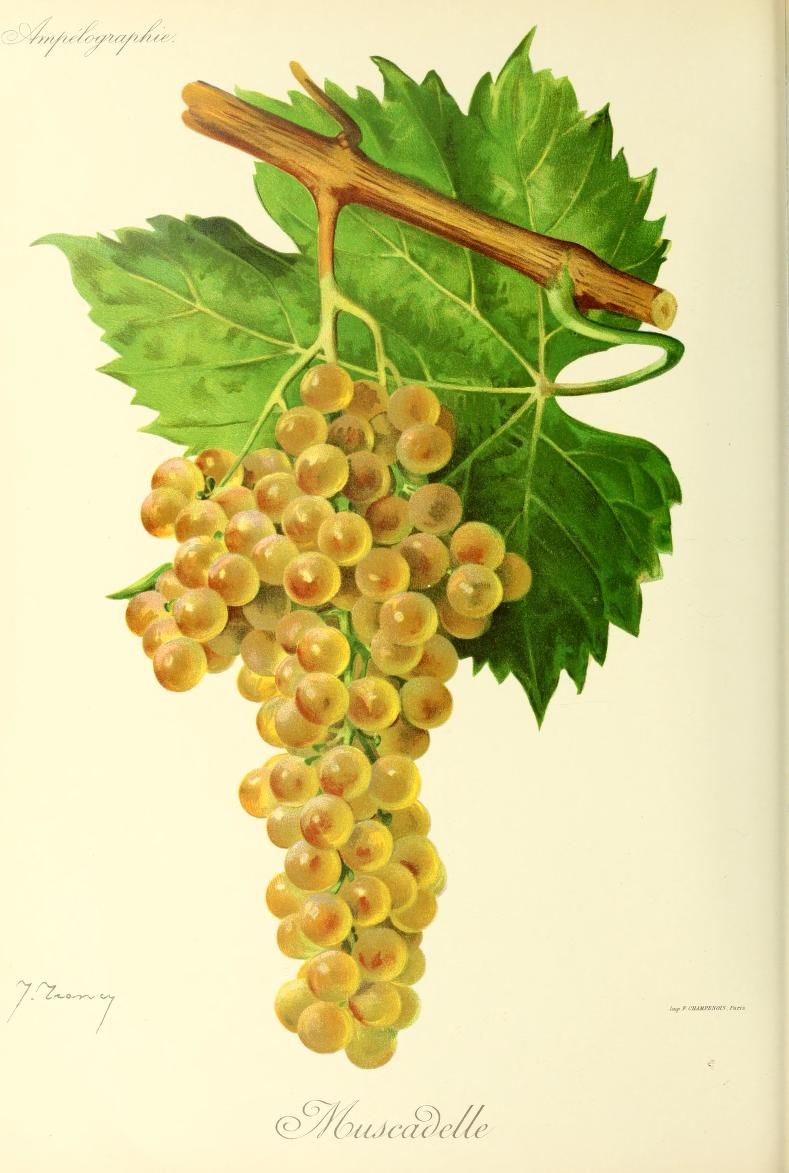
History and identity
Plantgrape places Muscadelle's probable origin in southwestern France and describes it as a probable descendant of Gouais Blanc. Neither statement establishes the location or date of the original seedling.1. Plantgrape qualifies both the southwestern French origin and the Gouais Blanc relationship; the pedigree should remain qualified.
Australia formerly called its Muscadelle-based fortified wine Tokay. That wine name was replaced by Topaque, with the Australian phaseout of Tokay completed in 2020. Topaque identifies an Australian fortified-wine tradition; it should not be read as evidence of a connection with Hungarian Tokaji.2. Wine Australia's labelling guidance gives 1 September 2020 as the end of the Tokay phaseout and explains the Topaque certification mark.
Viticulture
Muscadelle is vigorous and particularly susceptible to grey rot. A well-exposed site and a canopy that avoids crowding help reduce that risk, although they cannot remove the effects of a wet harvest. Powdery mildew and damage from insects add to the demands of keeping fruit sound.
Susceptibility to botrytis has different consequences according to the weather. Where conditions support noble rot, the fungus can help concentrate fruit for sweet wine. Persistent wet conditions can instead produce destructive rot. Growers therefore need suitable weather and selective harvesting to turn susceptibility into an advantage.
Wine character and regional uses
In Bordeaux, Muscadelle commonly accompanies Sémillon and Sauvignon Blanc in both dry and sweet white wines. Its floral aroma and rounded contribution can be perceptible in a modest share of the blend. Its relatively modest acidity makes the balance supplied by the other grapes useful. Ripeness and the proportion used matter more than the mere presence of Muscadelle on a technical sheet.
Rutherglen's warm days and long, generally dry autumns allow growers to leave fruit on the vine to concentrate. Autumn rain can interrupt that process. For Topaque, fermentation is stopped by fortification, retaining grape sugar before maturation in oak. Producers differ in whether they ferment with skins or work with juice alone.
The local growers' association describes Topaque through honey, toffee, candied fruit, and cold-tea characters. It traditionally has a finer, lighter profile than Rutherglen Muscat, though the age and concentration of the blend can substantially change that comparison. Extended wood maturation makes fresh-grape perfume only one part of the finished wine's character.
Sources
- Plantgrape, “Muscadelle”, origin, growing characteristics, and wine properties.
- Conseil Interprofessionnel du Vin de Bordeaux, “Muscadelle”, its role in Bordeaux white blends.
- Winemakers of Rutherglen, “Varietal Spotlight: Rutherglen Topaque”, production and regional wine character.
- Wine Australia, “Rutherglen”, regional climate and varieties.
- Wine Australia, “Additional labelling terms”, the Tokay phaseout and Topaque designation; accessed September 2026.