Concord
Concord is a blue-skinned American grape used for juice, jelly, and wine. Its conspicuous grapey character makes it familiar well beyond the wine world. In regional American wine, it often supports a fruit-forward style that draws on those familiar flavours.
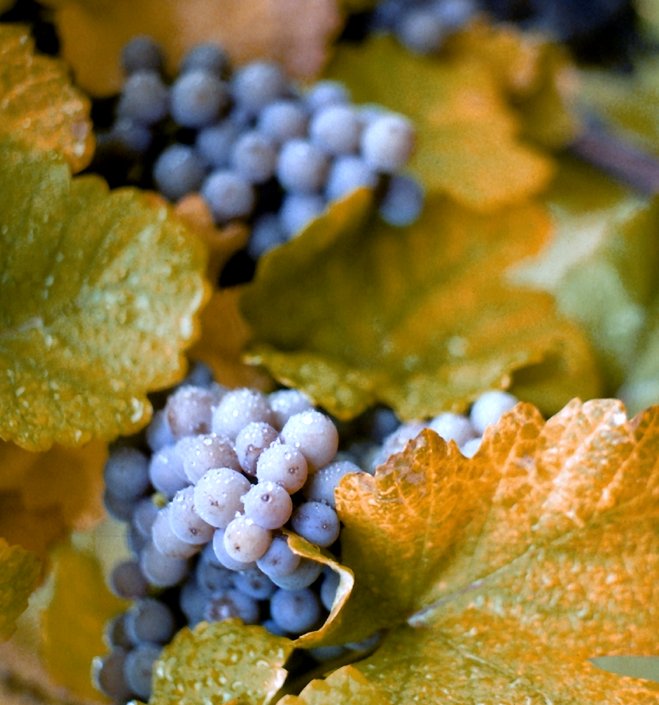
A cultivated American grape
The Concord Free Public Library's archival account credits Ephraim Wales Bull with developing the variety at Grapevine Cottage in Concord, Massachusetts, and records its commercial introduction in 1854.1. Concord Free Public Library, “Grapevine Cottage Scrapbook, 1880–1958,” collection history. Missouri's wine organization describes its large berries and readily separating skin, the feature called slip skin.
The University of Missouri identifies uneven ripening during very hot weather and susceptibility to black rot and phomopsis. Its agricultural adaptability therefore has limits. A healthy, evenly ripe crop still requires a site and management suited to the vine.
Juice and wine regions
The Lake Erie research programme at Penn State maintains Concord alongside Niagara and wine varieties. That continuing research setting helps explain its place within a regional grape economy that includes more than wine. Missouri also maintains Concord within its contemporary varietal range.
Alcoholic fermentation changes the fruit's sugar into alcohol; it does not require the finished wine to retain all the sweetness associated with grape juice. The amount of residual sugar is consequently an important part of reading a Concord bottling.
Sources
- Concord Free Public Library, “Grapevine Cottage Scrapbook, 1880–1958”, archival finding aid, 2012.
- Missouri Wine and Grape Board, “Concord”, cultivar account, accessed 22 September 2026.
- University of Missouri Extension, Home Fruit Production: Grape Culture, Concord entry, reviewed March 2026.
- Penn State, “Grape and Non-grape Crops”, Lake Erie Regional Grape Research and Extension Center, accessed 22 September 2026.