Somló
Somló is a Hungarian wine district centered on an isolated volcanic hill west of Lake Balaton. It is especially associated with structured white wines from Juhfark, Furmint, Hárslevelű, and Olaszrizling. Firm acidity and the ability to develop with maturation connect many of its wines, though producers differ in ripeness, extraction, and use of wood.
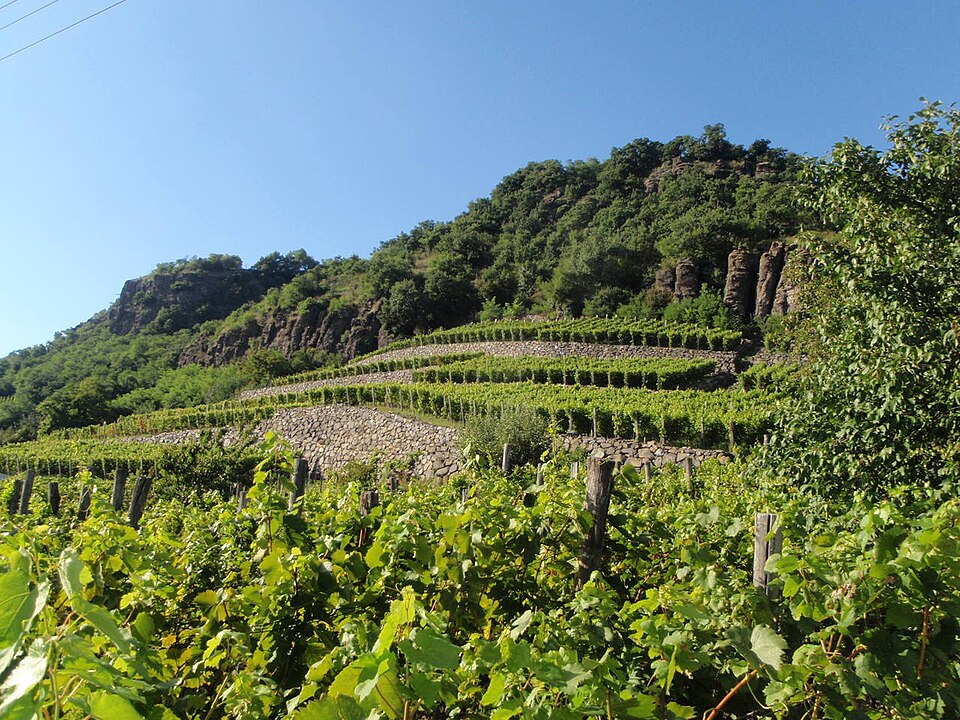
A hill with several exposures
Somló rises above the surrounding Marcal Basin. Basaltic material is prominent on the hill, while loess, sand, and clay occur around and over parts of its slopes. Vineyards occupy several exposures, including northern slopes as well as the sunnier southern side. The hill's outline is compact, but the direction and position of a parcel still alter its growing conditions.
The wider district also encompasses Ság Hill and Kis-Somlyó. Distinguishing the central hill from the district helps readers interpret regional accounts and the provenance of individual wines.
Grapes and maturation
Juhfark supplies an especially recognizable connection with Somló. Furmint and Hárslevelű also make substantial whites here, offering a useful comparison with their better-known roles in Tokaj.
Somlói Apátsági Pince documents one traditional cellar approach: fermentation and maturation in oak, followed by further time in bottle. The estate makes Juhfark, Furmint, and Hárslevelű its principal varieties and describes a short period of new oak for Juhfark. These choices can change texture and aroma alongside the effects of the vineyard.
A helpful introduction is to compare the grapes within one producer's range, then compare the same grape across producers. That separates varietal and cellar differences more clearly than expecting every Somló white to share a single “volcanic” flavor.
Sources
- Hungarian Wine Marketing Agency, “Somlói wine district,” Magyar Bor.
- Somlói Apátsági Pince, “About us.”