Château-Chalon
Château-Chalon is a small appellation in France's Jura, devoted to vin jaune. Its vineyards climb below a village on a limestone promontory north of Lons-le-Saunier. The name joins a particular set of slopes to a demanding cellar practice: making a dry white wine and maturing it for years beneath a surface veil of yeast.
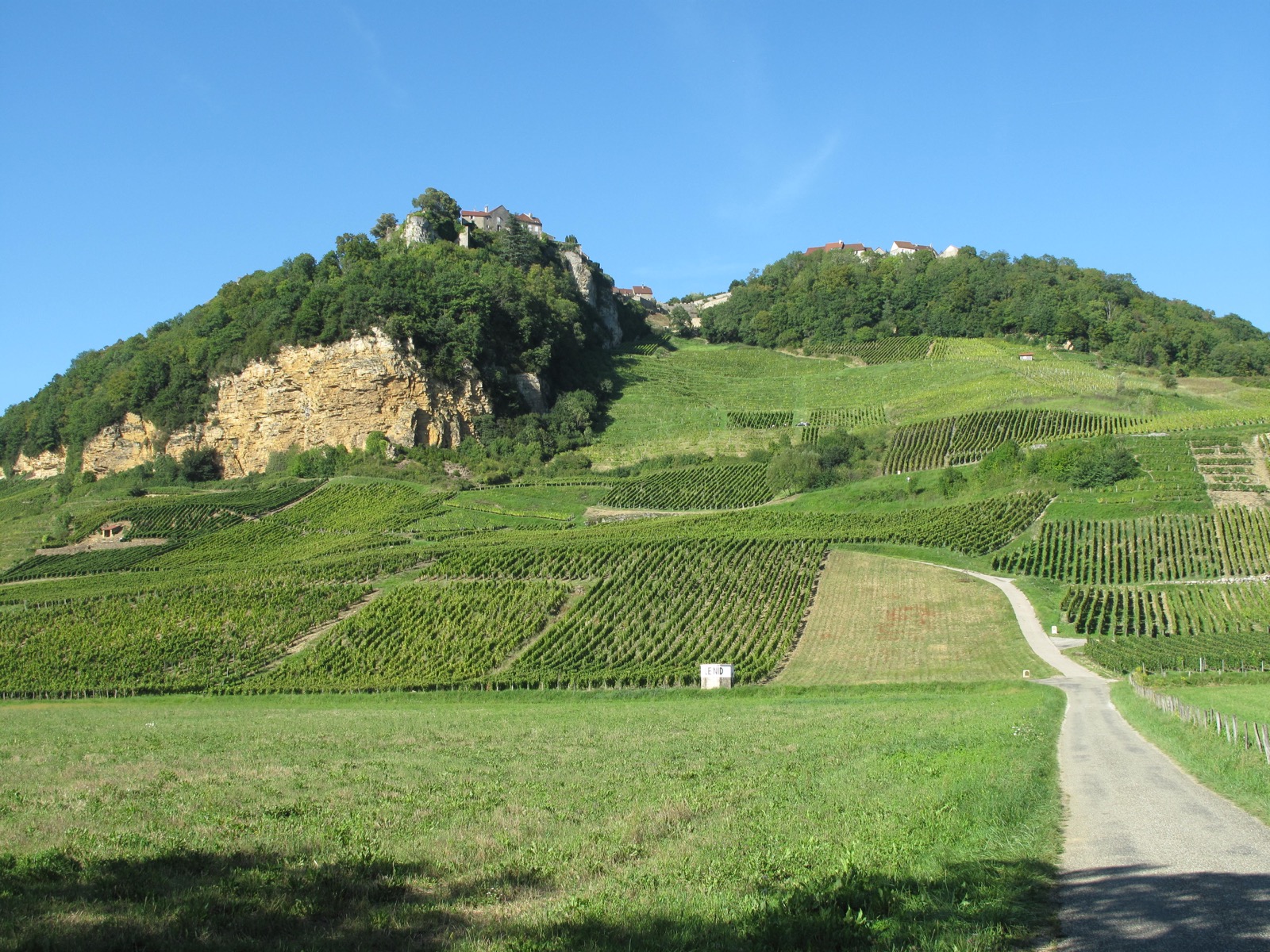
Vineyard and grape
South- and west-facing slopes catch the sun beneath cliffs that shelter the vines from cold winds. Limestone debris covers the marl beneath them. The combination of warmth, drainage, and water held at depth helps grapes ripen in the Jura's wet climate. The steep ground also demands work to retain soil and maintain access.
Savagnin is the defining grape. The specification adopted in August 2026 names it as the principal variety and conditionally permits Enfariné and Gringet under signed agreements. Their combined share is normally limited to 5 percent of an estate's appellation plantings and 10 percent of a finished blend; both limits rise to 20 percent for estates working less than three hectares of Château-Chalon.1. Château-Chalon specification, sections V and IX.1(a). These are conditional permissions in the adopted text, not a statement of current planting or blending practice.
Maturation and character
The wine ages in oak without topping up to replace evaporation. A yeast veil develops at the surface, reshaping its aroma during the long maturation. The rules require ageing until at least 15 December of the sixth year after harvest, including at least 60 months under the veil. Consumer release begins on 1 January of the seventh year.2. Château-Chalon specification, sections IX.2 and IX.5.
Château-Chalon is dry, with the savoury depth and walnut-and-spice aromas associated with vin jaune. Cellar conditions contribute to the differences between wines. Wink Lorch describes the area's typical maturation cellars as partly below ground, with gentler seasonal temperature changes than the attics traditionally used around Arbois. She associates this with less evaporation and a subtler spice character, while acknowledging overlap between the two places.3. Lorch, “Decoding Jura's Wine Styles,” section on the sous voile family.
The finished wine is presented in the squat 62-centilitre clavelin. Long bottle ageing can further develop its aromas; producer, vintage, and storage conditions determine how a particular bottle evolves.
Sources
- Ministère de l'Agriculture, Cahier des charges de l'AOP « Château-Chalon », homologated 11 August 2026, published in the ministry bulletin 27 August 2026, sections V, IX, and X.
- Institut national de l'origine et de la qualité, “Château-Chalon”, appellation profile, accessed 9 September 2026.
- Wink Lorch, “Decoding Jura's Wine Styles”, GuildSomm, 1 July 2025.