Roussanne
Also known as Bergeron
Roussanne is a white Vitis vinifera grape of the Rhône Valley. Its name is often connected with the russet or reddish-gold colour of ripe berries, and that colour change is a useful vineyard sign. The variety matters because it can combine perfume, a broad texture, and a firm line of acidity. It is also a capricious vine: ripening and yields can be irregular, disease pressure is important, and a late harvest can trade freshness for alcohol and softness.
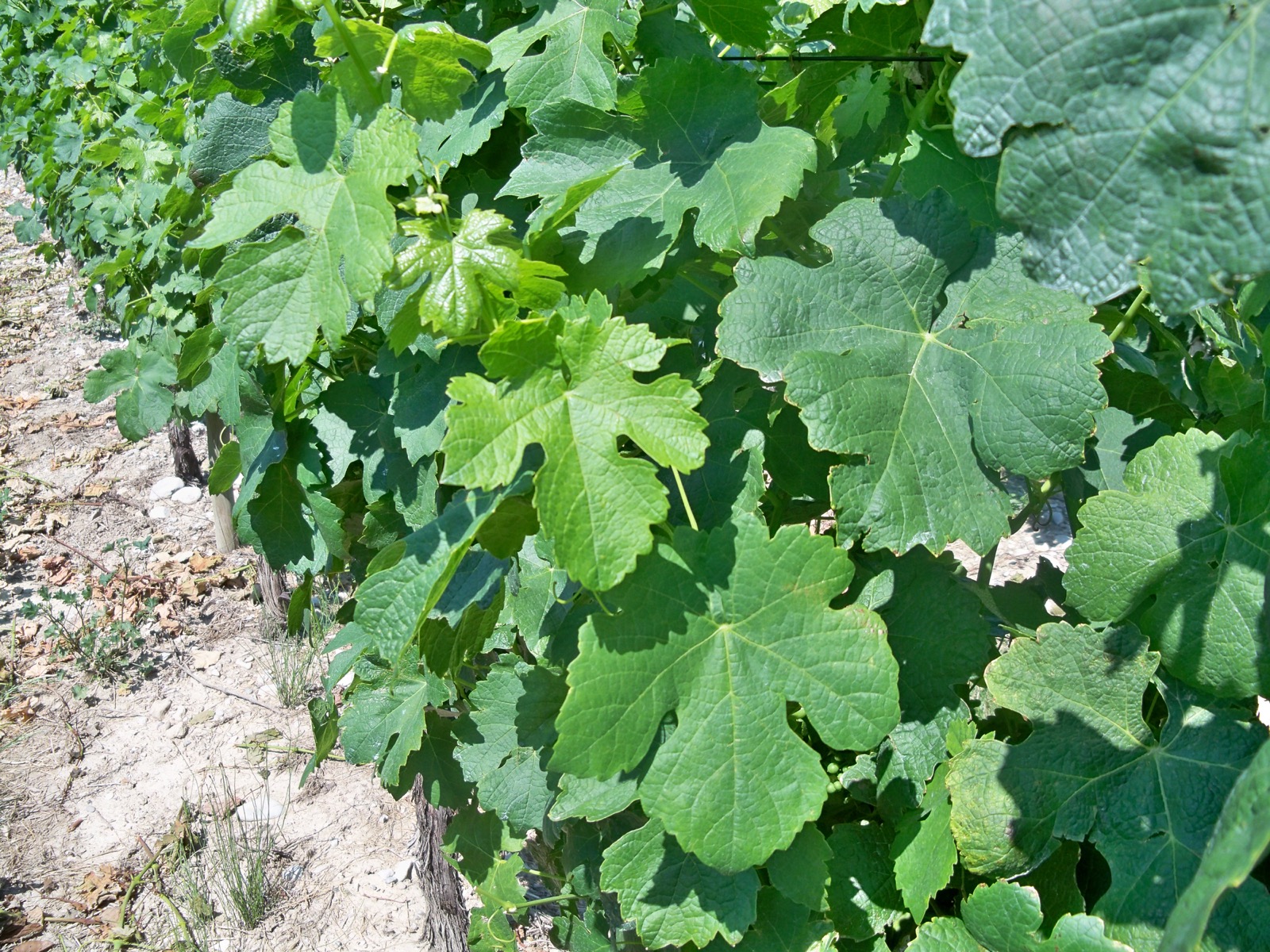
Viticulture
Roussanne is suited to warm, stony, well-drained sites, including lean hillside soils and stony loam-limestone. Inter Rhône describes it as a medium-vigour variety with good longevity, but also notes its sensitivity to powdery mildew and grey rot.1. Inter Rhône, “Roussanne”, accessed 7 September 2026. Maturity classifications differ: Inter Rhône places Roussanne in the early-to-mid-ripening range, while a 2022 Plantgrape record calls it mid-season. Specialist wine writing describes late and uneven ripening in some settings, alongside irregular yields and poor tolerance of some disease pressure.2. Decanter, “Roussanne”, accessed 7 September 2026.3. Institut français de la vigne et du vin, INRAE & Institut Agro Montpellier, “Roussanne B”, Plantgrape varietal record, edited 12 January 2022, pp. 1–2. Clone, site, season, canopy, and crop level all change the risk.
The harvest decision is unusually important. Roussanne needs enough time for its characteristic aroma and texture to develop, yet fruit that hangs too long can lose acid balance. In a warm site or season, picking may therefore be a choice between a more developed, fuller wine and a fresher one with less weight. Sorting and gentle handling matter in the winery as well. Roussanne juice can oxidise readily, so protection from unnecessary oxygen is one practical cellar choice, especially when the aim is to keep floral aromas and a pale colour.2. Decanter, “Roussanne”, accessed 7 September 2026.
Wine character
Young wines can show honeysuckle, iris, and other floral notes, with stone fruit and peach-like impressions. With ripeness and age, dried fruit, honey, and nutty tones become more prominent. Inter Rhône describes wines that are fine, complex, structured, and capable of ageing.1. Inter Rhône, “Roussanne”, accessed 7 September 2026.
Roussanne can give white wine a rounded, almost creamy breadth, but its acidity can keep that weight from becoming merely soft when the fruit was harvested in balance. The result depends on climate, crop level, harvest date, blending, fermentation, and maturation. Lees contact or oak can make the texture seem broader and add their own flavours; a cooler site, earlier harvest, or a less conspicuous vessel can leave more room for the grape's perfume and freshness.
Northern Rhône
In the northern Rhône, Roussanne is most often understood alongside Marsanne in white wines. Adopted specifications name Marsanne and Roussanne as the white-wine varieties for Hermitage, Crozes-Hermitage, Saint-Joseph, and Saint-Péray; Saint-Péray uses the pair for still and sparkling wines.4. Ministère de l'Agriculture et de la Souveraineté alimentaire, Cahier des charges de l'appellation d'origine contrôlée « Hermitage ».5. Ministère de l'Agriculture et de la Souveraineté alimentaire, Cahier des charges de l'appellation d'origine contrôlée « Crozes-Hermitage ».6. Ministère de l'Agriculture et de la Souveraineté alimentaire, Cahier des charges de l'appellation d'origine contrôlée « Saint-Joseph ».7. Ministère de l'Agriculture et de la Souveraineté alimentaire, Cahier des charges de l'appellation d'origine contrôlée « Saint-Péray ». Roussanne can appear on its own in practice, alongside the regional blending tradition.
Hermitage shows the grape in a site where richness and development are central to the style. The appellation's white wines are made from Marsanne and Roussanne, and the regional body describes them as smooth, creamy, and honeyed, with the capacity to develop further aromas over time.8. Inter Rhône, “Côtes du Rhône Cru AOC Hermitage”, accessed 7 September 2026. Crozes-Hermitage offers a broader set of sites and a generally more accessible expression: its white wines are dry and full-bodied, with floral and dried-fruit notes.9. Inter Rhône, “Côtes du Rhône Cru AOC Crozes-Hermitage”, accessed 7 September 2026. Saint-Péray gives the pairing a distinct sparkling role as well as still wines, using the grapes' texture and aroma in both forms.
A parcel's climate, soil, exposure, and water supply affect ripening, while the proportion of each grape and the cellar regime change the balance between Marsanne's weight and Roussanne's perfume, texture, and freshness.
Southern Rhône
Farther south, Roussanne is one member of a larger white-grape vocabulary. The current Côtes du Rhône description lists it among the principal white varieties alongside Bourboulenc, Clairette, Grenache Blanc, Marsanne, and Viognier, with blending used to combine aroma and freshness.10. Inter Rhône, “AOC Côtes du Rhône”, accessed 7 September 2026. In the warmer southern climate, that role is practical: Roussanne can bring fragrance and structure to blends whose other components supply different kinds of fruit, acidity, or weight.
Grenache Blanc and Roussanne are among the principal grapes in white Châteauneuf-du-Pape, where the regional body describes the wines as ample, expressive, and aromatically fresh. The appellation permits a much wider group of grapes than the northern crus, so Roussanne's contribution varies substantially from one blend to another.11. Inter Rhône, “Côtes du Rhône Cru AOC Châteauneuf-du-Pape”, accessed 7 September 2026.
Texas High Plains
The High Plains of West Texas gives Roussanne another contemporary regional role. McPherson Cellars' technical sheet identifies Farmhouse and La Pradera as vineyard sources and records seven months in stainless steel, with no skin contact. This is a useful comparison with oak-matured Rhône whites: a warm-region Roussanne can develop its texture and perfume through a different combination of harvest and cellar choices.
Sources
- McPherson Cellars, “Roussanne”, Texas High Plains technical sheet, vineyard sources and cellar methods, accessed 20 October 2026.
- Inter Rhône, “Roussanne”, accessed 7 September 2026.
- Decanter, “Roussanne”, accessed 7 September 2026.
- Inter Rhône, “Côtes du Rhône Cru AOC Hermitage”, accessed 7 September 2026.
- Inter Rhône, “Côtes du Rhône Cru AOC Crozes-Hermitage”, accessed 7 September 2026.
- Inter Rhône, “AOC Côtes du Rhône”, accessed 7 September 2026.
- Inter Rhône, “Côtes du Rhône Cru AOC Châteauneuf-du-Pape”, accessed 7 September 2026.
- Institut français de la vigne et du vin, INRAE & Institut Agro Montpellier, “Roussanne B”, Plantgrape varietal record, edited 12 January 2022.
- Ministère de l'Agriculture et de la Souveraineté alimentaire, Cahier des charges de l'appellation d'origine contrôlée « Hermitage ».
- Ministère de l'Agriculture et de la Souveraineté alimentaire, Cahier des charges de l'appellation d'origine contrôlée « Crozes-Hermitage ».
- Ministère de l'Agriculture et de la Souveraineté alimentaire, Cahier des charges de l'appellation d'origine contrôlée « Saint-Joseph ».
- Ministère de l'Agriculture et de la Souveraineté alimentaire, Cahier des charges de l'appellation d'origine contrôlée « Saint-Péray ».