Norton
Also known as Cynthiana
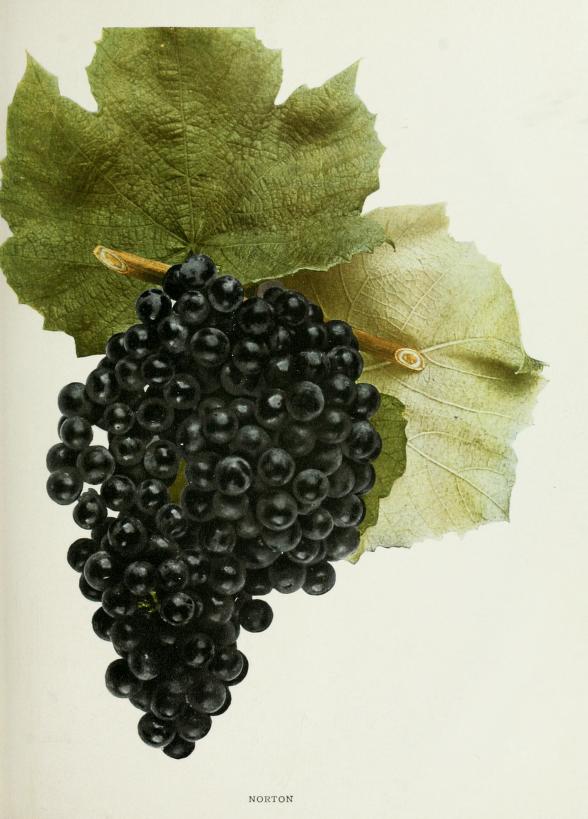
Norton is an American red grape strongly associated with Virginia and Missouri, where it is also known as Cynthiana. Its wines can combine dark fruit, substantial body, and pronounced acidity. It gives those regions a wine identity grounded in American grape ancestry.
Ripeness and acidity
Virginia Cooperative Extension describes Norton as a late-ripening grape with small berries and clusters. Its account emphasizes the potential for high fruit acidity and the importance of exposing the crop to light through an appropriate training system. This makes the length of the season and the condition of the canopy consequential to the eventual wine.
Acidity and tannin contribute different sensations. A dark, full Norton can feel sharp without being especially drying; extraction and maturation further modify the balance. A description based only on colour or weight misses that distinction.
Two regional homes
Missouri's wine organization presents Norton as a central dry-red variety and records Cynthiana as an alternative name. Virginia's 2026 grape guide likewise places it within the state's contemporary wines, emphasizing dark fruit and bright acidity. Its continuing relevance extends beyond an account of nineteenth-century American viticulture.
Comparing wines from the two states is most useful when harvest conditions and cellar choices are known. Oak maturation can add spice or vanilla and change texture, while the grape's own fruit and acid balance remain the foundation.
Sources
- Virginia Cooperative Extension, Small Fruit in the Home Garden, Norton cultivation account.
- Missouri Wine and Grape Board, “Norton”, regional identity and wine account, accessed 22 September 2026.
- Virginia Wine, “Beyond the Bottle: A Guide to Virginia's Grapes”, 1 June 2026.