Oak maturation
Also known as Oak aging, Oak ageing, Barrel aging, Barrel ageing
Oak maturation means keeping wine in contact with oak after alcoholic fermentation, often in a barrel or larger cask. Substances move from wood into wine, small amounts of oxygen enter, and the wine's own pigments, tannins, aromas, lees, and microbes continue to change.
A wine can ferment in tank and mature in barrel, ferment in barrel and mature elsewhere, or remain in the same vessel for both stages. Malolactic conversion and lees contact may overlap with oak maturation, but each has its own causes and effects.
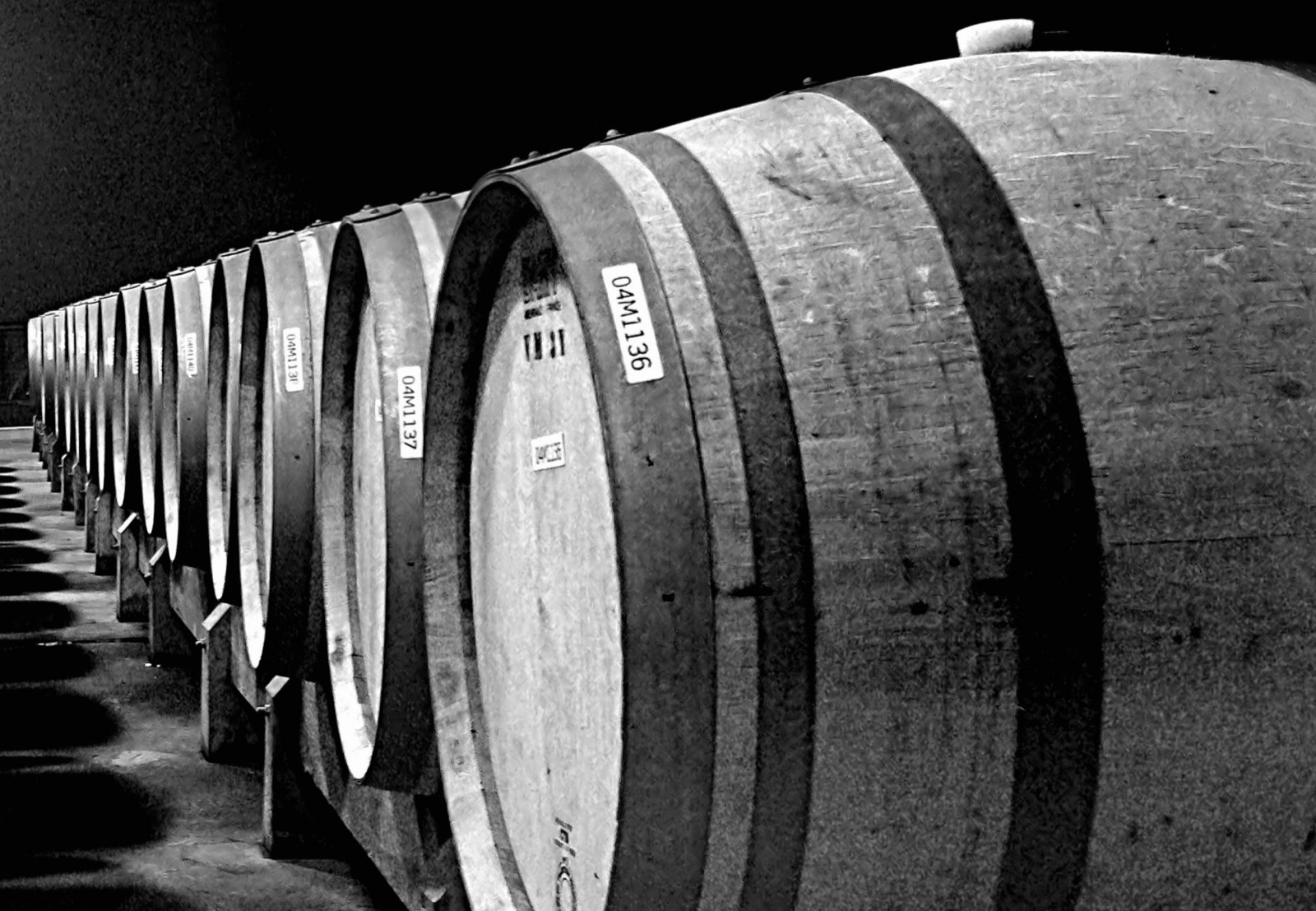
Vessel size and oxygen
A smaller barrel has more wood surface for each litre of wine than a larger cask of similar shape. All else being equal, this increases the opportunity for wood compounds to be extracted. In a study comparing 225- and 500-litre barrels, the smaller vessels transferred more oak lactones and vanillin, while many other measured properties differed little.
Oxygen supply is less predictable than surface area alone. Oxygen can pass through the wood and through joins, while the bung, stave thickness and anatomy, degree of wetting, barrel construction, and cellar conditions all matter. Research on whole barrels shows that wet wood transmits less oxygen than dry wood and that nominally similar barrels can differ. Topping, stirring, racking, and the headspace created as wine evaporates add further oxygen events. A large old cask may consequently contribute little obvious wood aroma while still acting differently from an airtight steel tank.
Limited oxygen can help reshape red-wine tannins and pigments, sometimes stabilising colour and changing astringency. These reactions depend on the wine's starting phenolics, sulfur dioxide, temperature, and the timing and amount of exposure. Excessive oxygen can consume protective sulfur dioxide, diminish fresh aroma, brown a white wine, or support spoilage. Oak maturation is controlled oxidation only when the vessel and wine are well managed.
Species, seasoning, and toast
The principal cooperage oaks include European Quercus petraea and Q. robur and North American Q. alba. Species influence anatomy and the available mix of ellagitannins, oak lactones, and other extractives. In one controlled barrel study, for example, wine in new Q. alba accumulated substantially more cis-oak lactone than wine in new Q. petraea. Forest, individual tree, grain, stave selection, seasoning, cooperage, and the wine itself create variation within each origin.
Before a barrel is assembled, cut staves are seasoned to reduce moisture and make the wood suitable for cooperage. Outdoor seasoning also changes some extractives. An experiment following oak through 12, 18, and 24 months found changes in the wood's composition and in wine exposed to it, but its panel could not reliably distinguish every seasoning interval. Seasoning effects depend on wood selection, yard climate, and handling as well as time.
Heat first helps bend the staves and then toasts the barrel's inner surface. It breaks down wood polymers and changes the balance of extractable compounds: some ellagitannins decline, while lignin and carbohydrate degradation can form vanillin, furans, and volatile phenols. The response is not linear. A compound may reach a maximum and then fall as heating continues, and the temperature varies with depth in the stave.
Barrel age and time
A new barrel contains a large, readily accessible pool of wood compounds. Extraction is often quickest early in the first fill, then slows as the concentration gradient falls and the surface layers become depleted. Reuse usually reduces the transfer of aroma-active compounds, especially those concentrated near the toasted surface. Deposits and previous wine also modify the wood. An older barrel described as “neutral” contributes little perceptible new-oak aroma. It can still admit oxygen, hold lees, permit evaporation, and provide a microbial habitat.
Some volatile compounds accumulate rapidly, are transformed by yeast or bacteria, adsorb to lees, or later decline. Slower changes in red-wine pigment and tannin can continue after the most conspicuous wood extraction has eased. Wine composition also affects what dissolves and how it is perceived.
Fermentation in wood
During alcoholic fermentation, active yeast, carbon dioxide, heat, and often lees change the environment in which wood compounds are extracted and transformed. Yeast can convert vanillin to much less aromatic vanillic alcohol, for example, so fermenting in a new barrel need not produce the same wood impression as transferring finished wine into it. Barrel-fermented white wine also commonly remains on its fermentation lees, making lees aging part of the result unless the wine is promptly racked.
Malolactic fermentation can occur in barrel too. Chardonnay can combine wood, lees, and malolactic effects in different proportions according to the producer’s choices.
Related topics
Sources
- International Organisation of Vine and Wine, “Ageing in small capacity wooden containers”, International Code of Oenological Practices, II.3.5.12.1, accessed 1 September 2026.
- María del Alamo-Sanza & Ignacio Nevares, “Oak wine barrel as an active vessel: A critical review of past and current knowledge”, Critical Reviews in Food Science and Nutrition 58 (2018), pp. 2711–2726.
- Alexandra Le Floch, Michael Jourdes, Nicolas Mourey, Pierre-Louis Teissedre & Thomas Giordanengo, “Oak wood seasoning: impact on oak wood chemical composition and sensory quality of wine”, IVES Conference Series, Macrowine 2016.
- Encarna Gómez-Plaza, Luis J. Pérez-Prieto, José I. Fernández-Fernández & José M. López-Roca, “The effect of successive uses of oak barrels on the extraction of oak-related volatile compounds from wine”, International Journal of Food Science and Technology 39 (2004), pp. 1069–1078.
- María Reyes González-Centeno, Cécile Thibon, Pierre-Louis Teissedre & Kleopatra Chira, “Does barrel size influence white wine aging quality?”, IVES Technical Reviews (2020).
- Peter Godden, “Understanding the effects of lees contact in white wine”, Australian Wine Research Institute Technical Review 249 (2020), pp. 4–8.