Phylloxera
Phylloxera, Daktulosphaira vitifoliae, is a small, aphid-like insect that feeds on grapevines. Root-feeding forms can severely damage susceptible vines, particularly Vitis vinifera. The pest's spread during the nineteenth century helped transform vineyard planting around the world and remains a reason for grafting wine grapes onto resistant rootstocks.
How roots are damaged
Feeding produces swellings and injured tissue on roots. Secondary infections can enlarge the damage, killing sections of the root system. The resulting vine grows less strongly, produces less fruit, and may eventually die. Severity depends partly on the vine and soil environment.
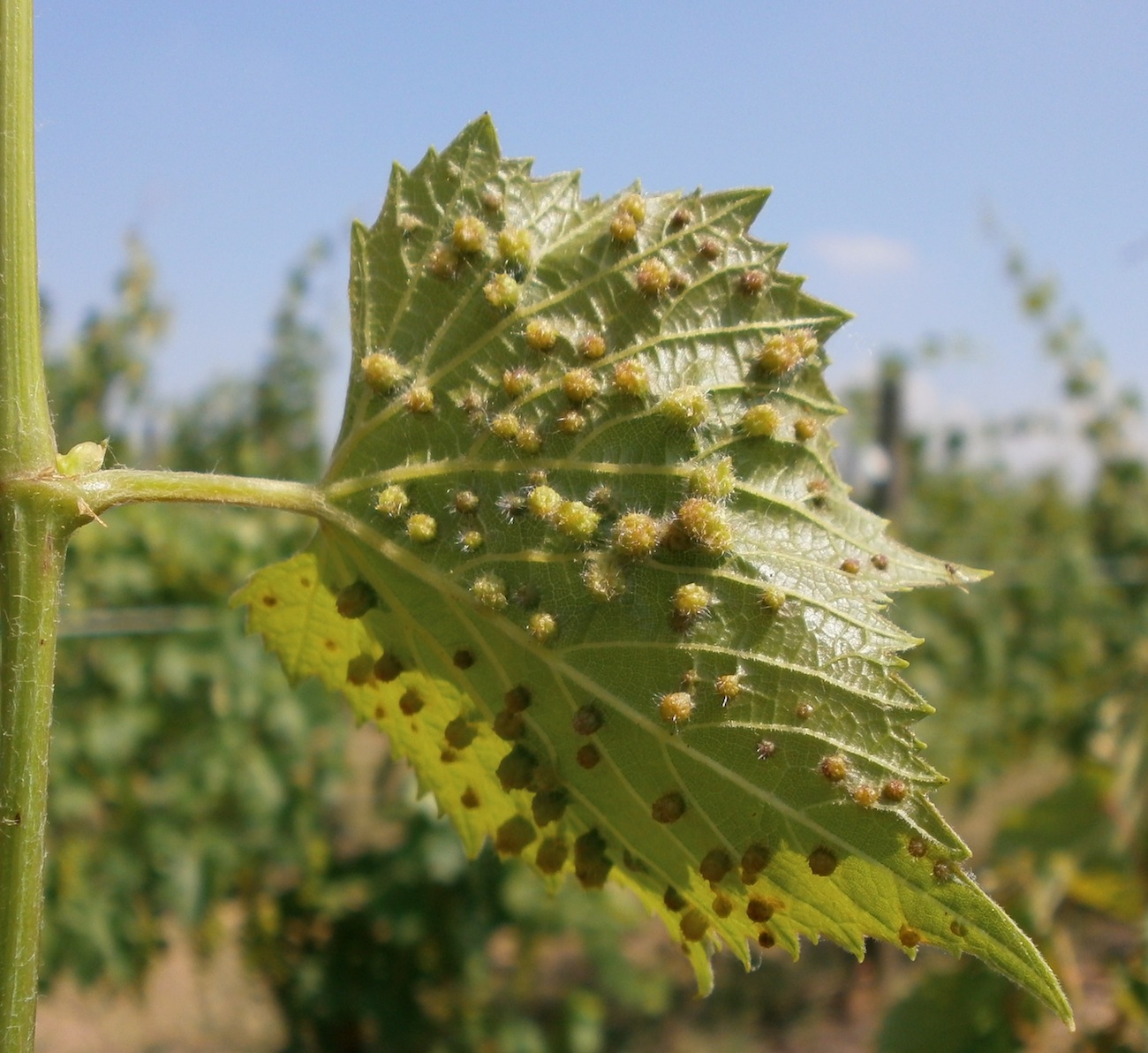
The insect can move with planting material and contaminated equipment or footwear, as well as by local dispersal. Preventing movement between vineyards therefore addresses a different problem from keeping an already infested vine productive. Leaf-feeding forms also produce visible galls; their prominence varies geographically and does not directly measure root damage.
Resistant roots and continued vigilance
Rootstocks derived from resistant grape species allow growers to retain the fruit of the desired wine variety while changing the vulnerable root system. Protection depends on the particular combination of rootstock and pest. University of California guidance cites the failure of AXR#1 under pressure from a virulent phylloxera population as an important example.1. University of California Statewide Integrated Pest Management Program, “Grape Phylloxera,” cultural-control section.
Vinehealth Australia's historical timeline records outbreaks spreading across Europe and other wine countries from the nineteenth century onwards. It also shows the development of quarantine and planting-material controls, including South Australian restrictions beginning in the 1870s. This history helps explain why vineyards in different countries adopted different mixtures of resistant rootstocks and measures to keep the pest out.
A surviving ungrafted vineyard may reflect a favourable soil environment or absence of the pest. Its existence alone does not establish that the planted variety has resistant roots.
Sources
- University of California Statewide Integrated Pest Management Program, “Grape Phylloxera”.
- Vinehealth Australia, “125th Anniversary Gallery”, historical timeline.
- Jon Traunfeld, “Growing Grapes in a Home Garden”, University of Maryland Extension, phylloxera section, updated 2024.