Badacsony
Badacsony is a Hungarian wine district on and near the northern shore of Lake Balaton. Its volcanic hills and white wines make it a distinct part of the broader Balaton landscape. The district includes several hills and villages; Badacsony is also the name of the conspicuous flat-topped hill that gives the area its name.
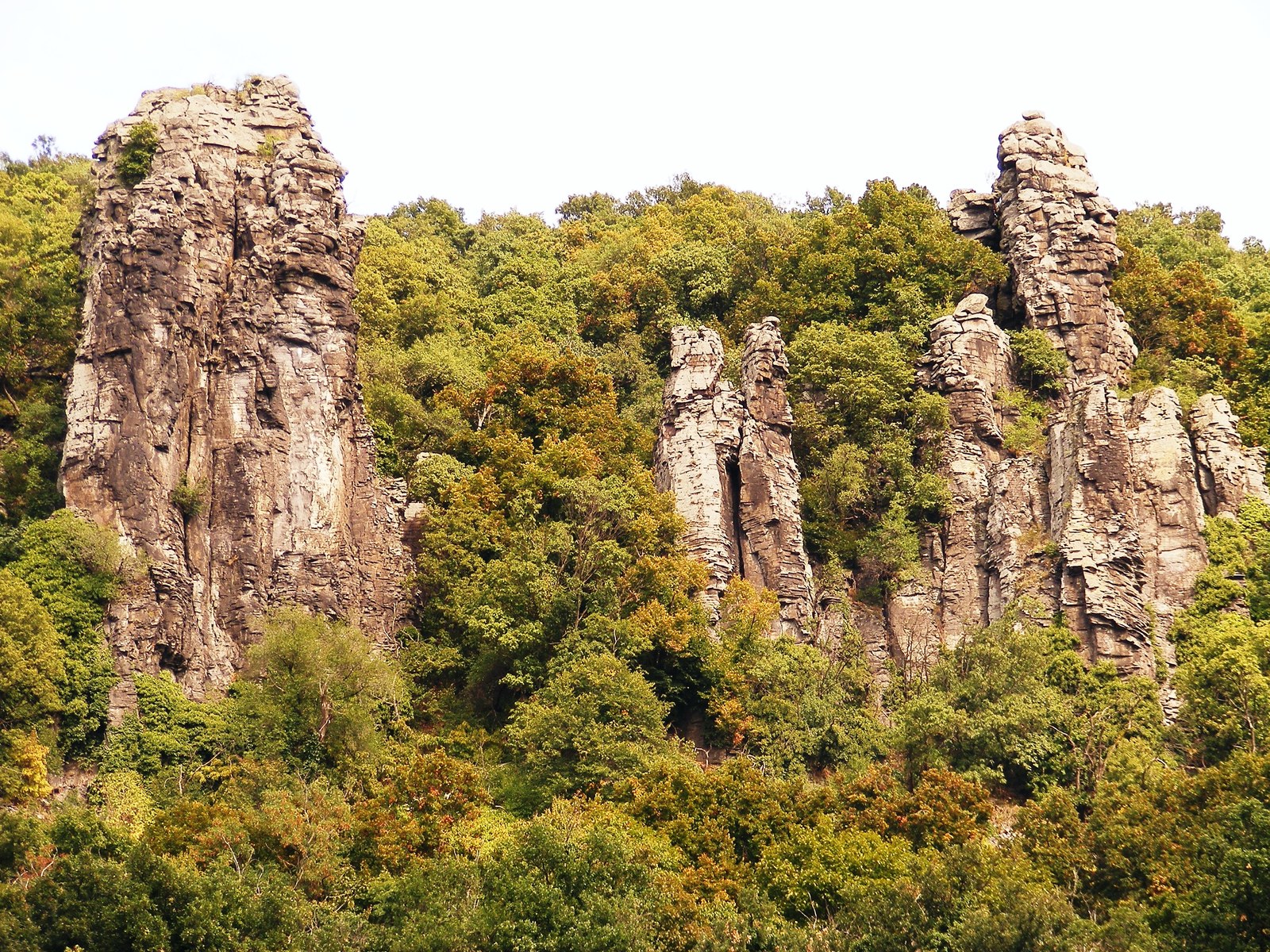
Lake, hills, and white grapes
The lake and surrounding uplands influence growing conditions, while slopes provide different exposures. Basalt records the area's volcanic past, but vineyards occupy soils with varying depths and composition. A hill or vineyard name therefore helps locate a wine within a more varied landscape than the single word “volcanic” conveys.
Olaszrizling connects Badacsony with neighbouring Balaton districts. Pinot Gris, locally called Szürkebarát, is another established white grape. Kéknyelű gives the region a more localized point of reference: its continuing cultivation is an important part of Badacsony's varietal identity.
Continuity through cultivation
The Kéknyelű Winery's account, published by the regional wine-route association, describes vineyards on Badacsony's southern slopes planted with Kéknyelű, Budai Zöld, Olaszrizling, and Pinot Gris. The family also records propagating Kéknyelű from its registered source vineyard. This is a concrete example of how a local grape survives through maintaining and multiplying planting material.
The same account describes wooden-barrel maturation before bottling. Alongside grape choice and site, this introduces another reason for differences among the district's white wines. Comparing Badacsony with Csopak through Olaszrizling, or exploring its local grapes, offers two complementary routes into the region.
Sources
- Hungarian Tourism Agency, Personally: Hungarian Wine, Balaton section.
- Badacsony Tourism and Wine Route Association, “Kéknyelű Winery”, producer account and regional navigation, accessed 22 September 2026.