Inzolia
Also known as Insolia, Ansonica
Inzolia is a white grape of Sicily and coastal Tuscany, where it is usually called Ansonica. Its Sicilian history includes Marsala and blends with Catarratto and Grillo, but dry varietal wines and Tuscan skin-contact versions are equally useful to understanding it today. The names identify one grape across different regional traditions.
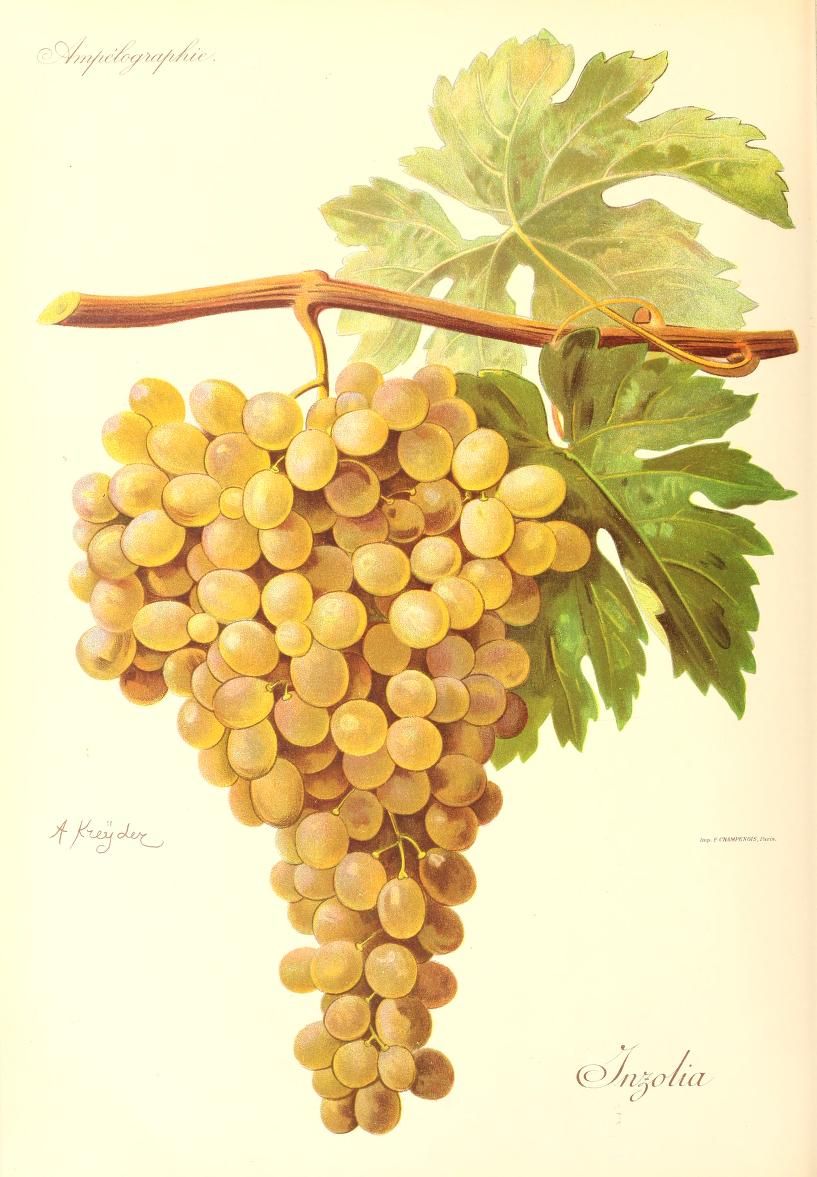
Vineyard behaviour
Vivai Cooperativi Rauscedo describes a vigorous vine with large, relatively loose bunches, substantial golden berries, and thick skins. Its profile distinguishes reasonable drought tolerance from vulnerability to extreme summer heat. Those are different stresses: a vine's ability to cope with limited water does not guarantee that exposed berries or leaves will tolerate any temperature.
Harvest decisions also help explain the wine's range. Earlier picking and careful handling can favour a lighter, fresher white; riper fruit and a different approach to oxygen can lead towards the fuller character long associated with Marsala. The nursery notes susceptibility to powdery and downy mildews in conducive seasons, so a warm regional climate does not remove the need for disease management.
Sicily: fragrance and freshness
At Sallier de La Tour near Monreale, Tasca d'Almerita emphasizes northern exposures sheltered from hot scirocco winds. Its 2023 Inzolia was fermented as a white wine, without malolactic fermentation, and spent four months on fine lees in steel. This is a useful reference for the fresh dry style: retaining malic acid and using lees contact address different aspects of the wine, acidity and texture respectively.
The producer describes orange-blossom and almond associations. These are helpful pointers to that bottling, not a fixed aromatic test for identifying all Inzolia. In a blend, the other grapes and their proportions further change what the drinker perceives.
Tuscany: Ansonica with its skins
The Grosseto coast provides a second regional context. Vigneti Giole's Ansonica 1 comes from an old terraced vineyard on Monte Argentario, facing Giglio. Its published method uses fifteen days of fermentation on skins, followed by maturation on fine lees in concrete. That is a markedly different route from pressing before fermentation.
The comparison explains why the grape can appear as either a pale dry white or a more textured skin-contact wine. Pressing determines when juice or wine leaves the skins; extraction before that separation changes colour and phenolic texture. The Tuscan name is therefore useful to recognize, but it does not by itself guarantee skin contact or any single production method.
Sources
- G. Scalabrelli, C. D'Onofrio, G. Barbagallo & V. Falco, “Ansonica”, Italian Vitis Database, 2015.
- Vivai Cooperativi Rauscedo, “Ansonica”, varietal profile, accessed September 2026.
- Tasca d'Almerita, “Inzolia” and 2023 technical sheet, Sallier de La Tour.
- Vigneti Giole, “Ansonica 1”, vineyard and vinification technical sheet.