Appassimento
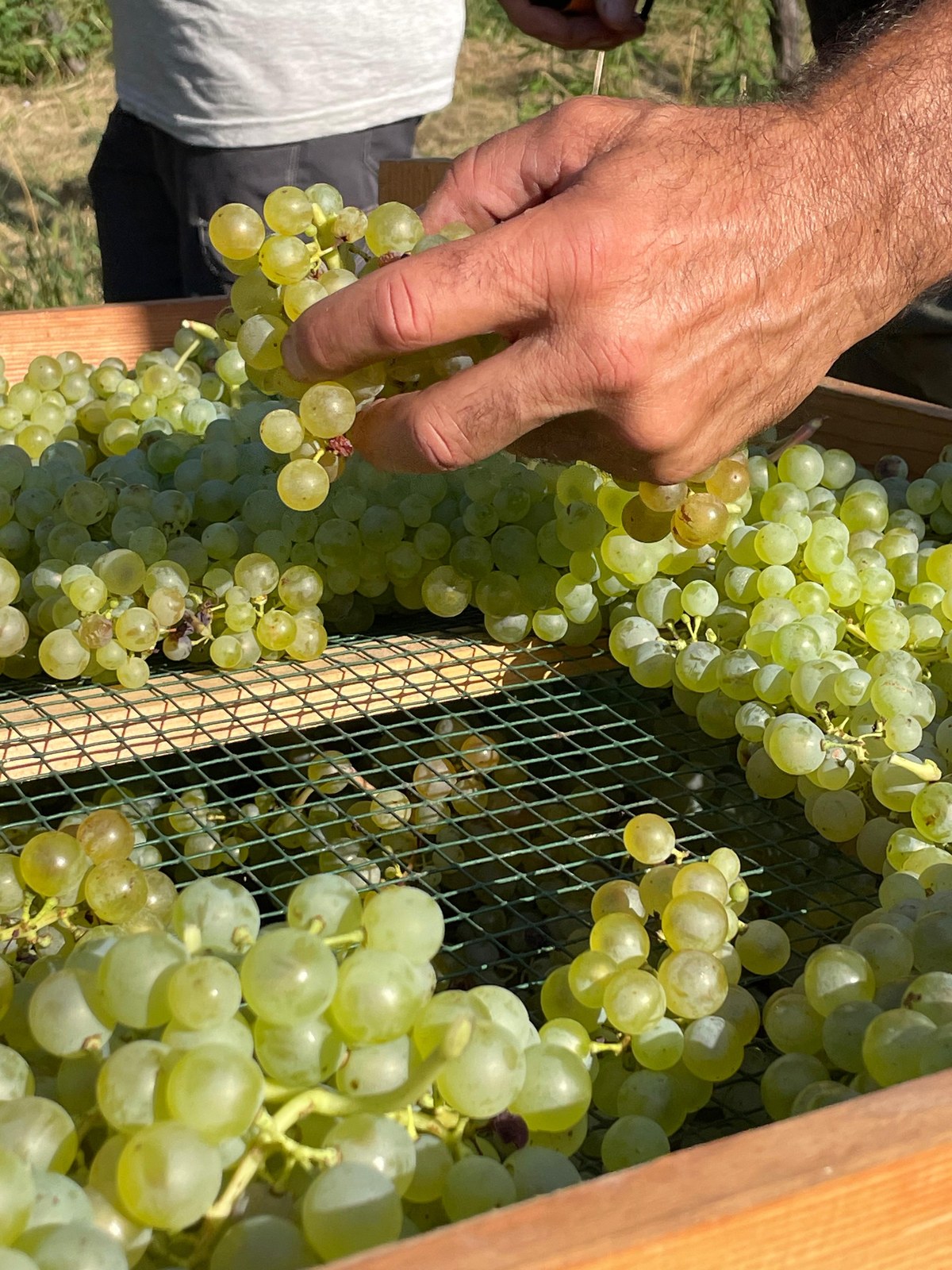
Appassimento is the partial drying of grapes used to make wine. In many Italian traditions, growers harvest sound bunches and place them in ventilated rooms before pressing or fermenting them. Water loss concentrates the must, while the living berries continue to undergo chemical changes. The eventual wine depends on both this drying phase and the fermentation that follows.
Concentration and time
Temperature, humidity, airflow, and the structure of the berry influence how quickly water leaves the fruit. The rate matters beyond achieving a target weight loss. In a controlled study of Corvina, forced airflow brought grapes to the same degree of dehydration much sooner than natural drying, but the resulting patterns of gene expression and metabolite accumulation differed.1. Sara Zenoni and colleagues, 2020. Their Corvina experiment compared natural and forced-air drying at the same temperature; reaching 30% weight loss took approximately 120 and 60 days, respectively.
The experiment helps explain why two lots with similar sugar concentration need not have identical flavour potential. Drying preserves some compounds, concentrates others, and allows metabolic changes to proceed over time. Acidity, for example, reflects both water loss and the berry's continued use of malic acid in respiration.
Regional interpretations
Valpolicella uses dried grapes for both the relatively dry Amarone and sweet Recioto. Drying raises potential alcohol; the amount of sugar left after fermentation determines much of the difference in sweetness.
White grapes offer other expressions. For Torcolato in Breganze, Maculan describes four months of drying selected Vespaiola in a fruttaio, followed by barrel maturation of the wine. Cantina Toblino's Valle dei Laghi Vino Santo uses Nosiola dried on racks until Holy Week before pressing and a long cellar maturation.
These methods share a concentration step but differ in grape, drying duration, and subsequent handling. Appassimento therefore describes a process that can support several distinct regional wine traditions.
Sources
- Sara Zenoni and colleagues, “Rapid dehydration of grape berries dampens the post-ripening transcriptomic program and the metabolite profile evolution”, Horticulture Research 7, 141, 2020.
- Maculan, “Torcolato”, grape and production account.
- Cantina Toblino, “Vino Santo Trentino DOC”, Nosiola drying and maturation account.